What to Expect
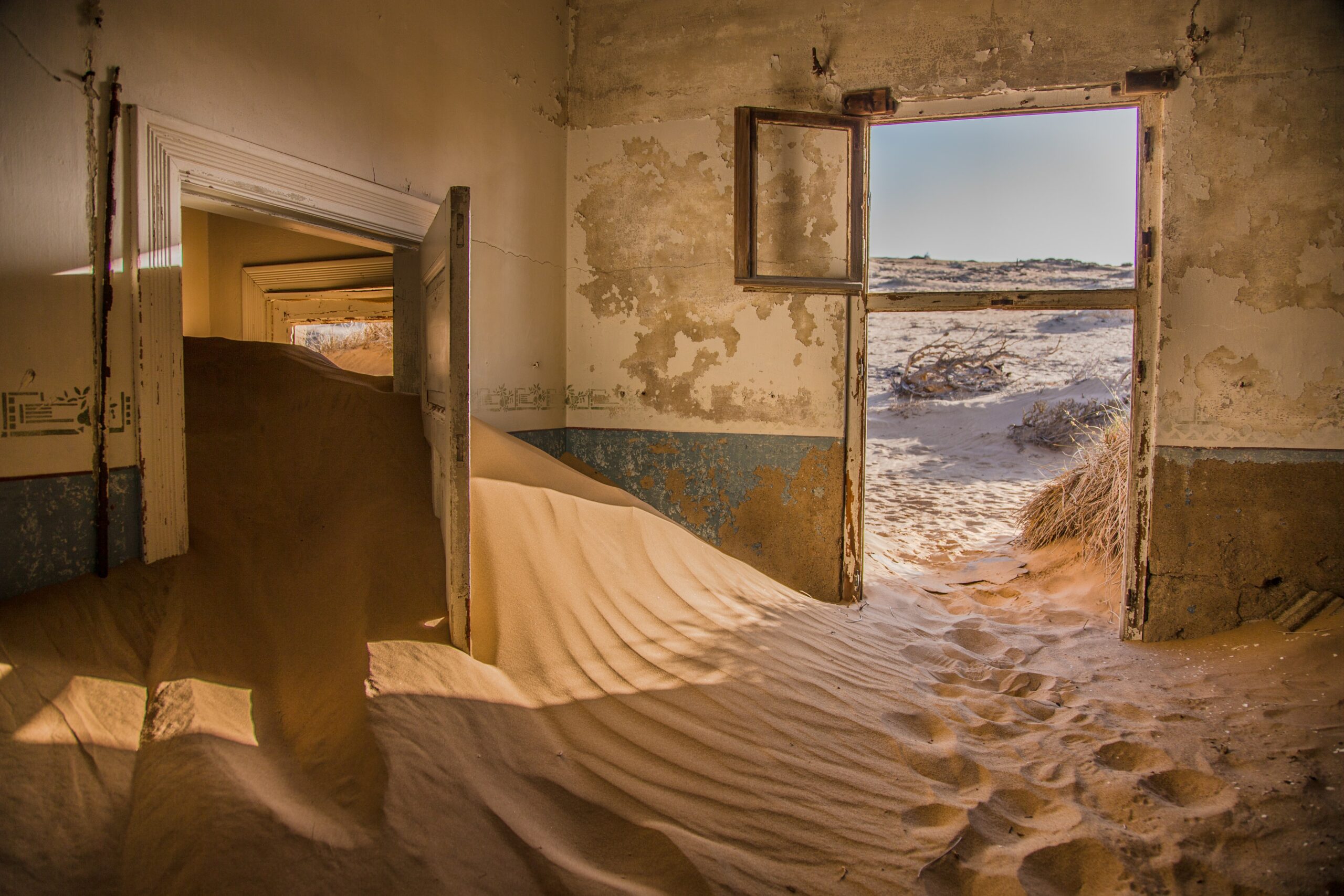
Namibia is known for its contrasting landscapes and is a popular safari destination. From the game-rich Etosha National Park to the wild and desolate Skeleton Coast, from the monumental red dunes of Sossusvlei to the majestic Fish River Canyon, the “ghost town” of Kolmanskop; the Quiver Tree Forest and the Giants’ Playground. A Namibia Safari is a journey through a unique and ancient land.
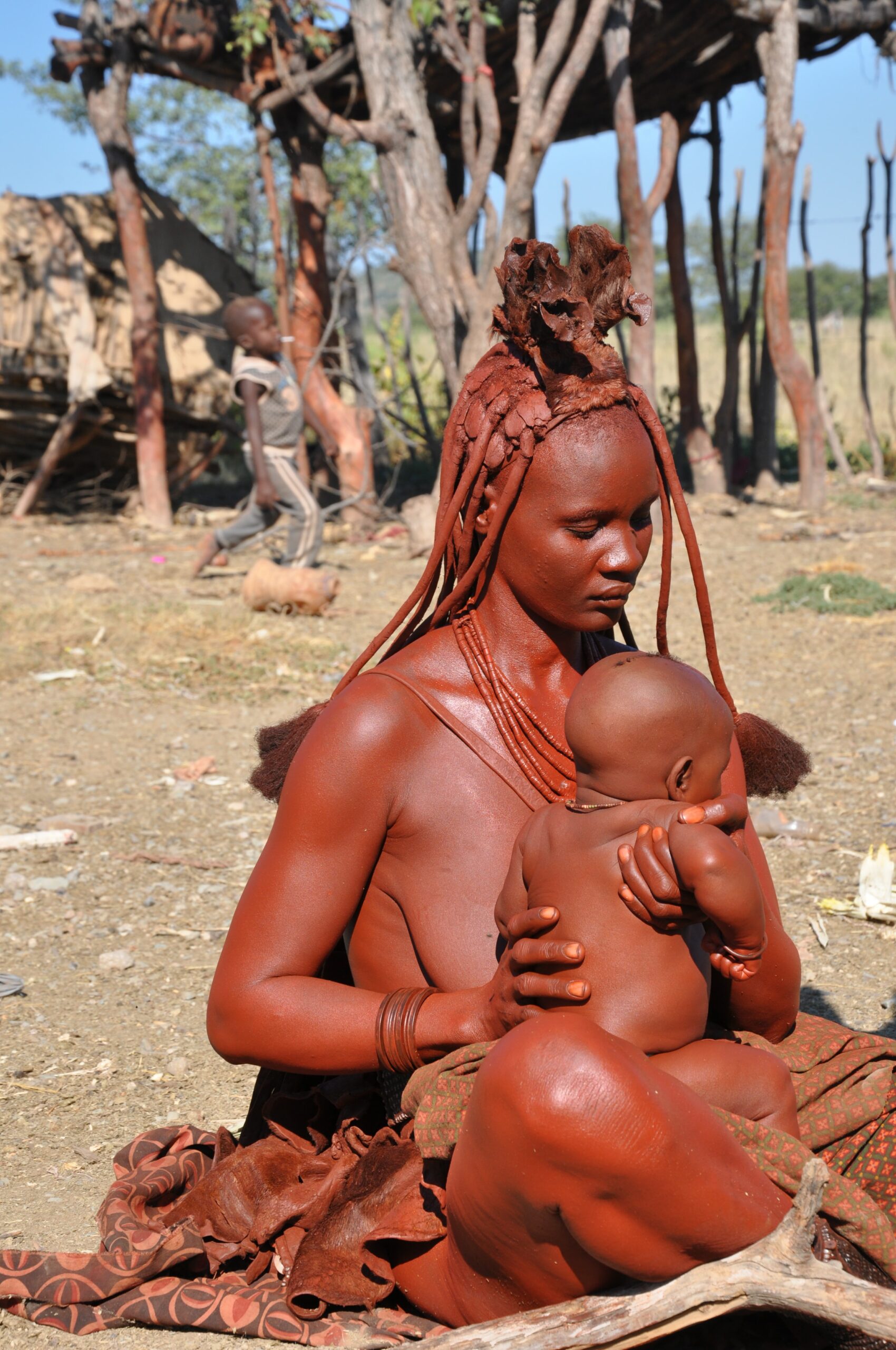
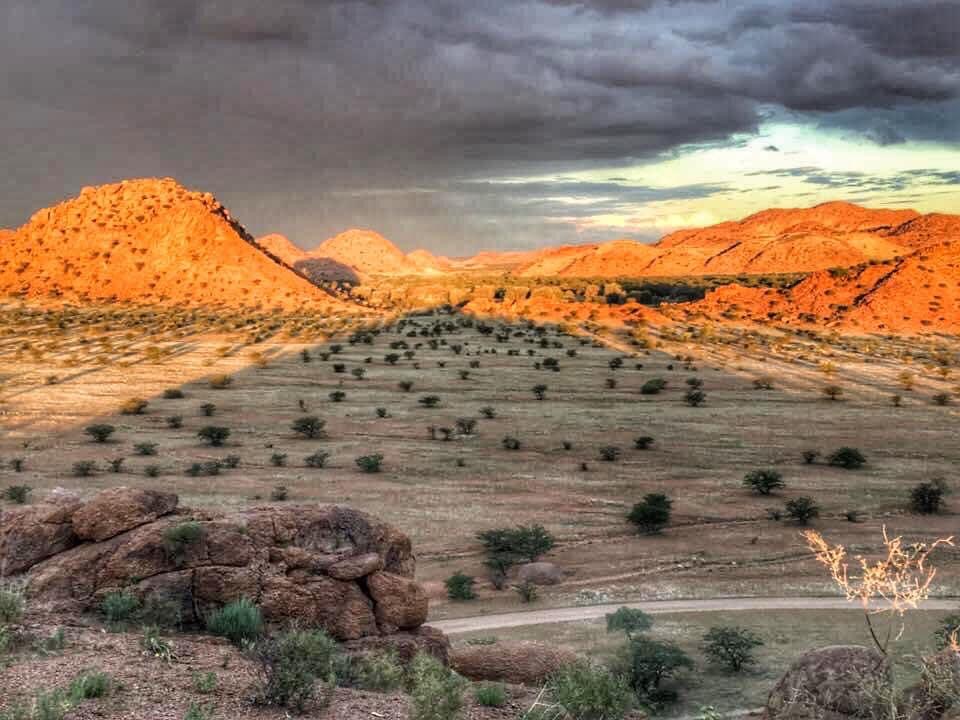
The desolate Namib Desert is the oldest known, and most extreme desert in the world. Damaraland, with its thorn bush savannah and rugged mountains, is renowned for its ancient rock art and paintings. Dominated by rugged mountain ranges and steep escarpments, and scorched by a relentless desert sun, is Kaokoland – inhabited almost exclusively by the unique semi-nomadic Himba tribe.
This timeless country is one of the least known in Southern Africa, and offers the visitor a richly diverse feast of cultural, scenic and wildlife experiences.
Money: The unit of currency is the Namibian Dollar which in conjunction with the South African rand is the only legal tender in Namibia. Most major hotels have foreign exchange facilities and credit cards are also widely accepted.
Language: English is the official language of Namibia, however Oshiwambo is the most commonly spoken language. Afrikaans is the most commonly understood national language.
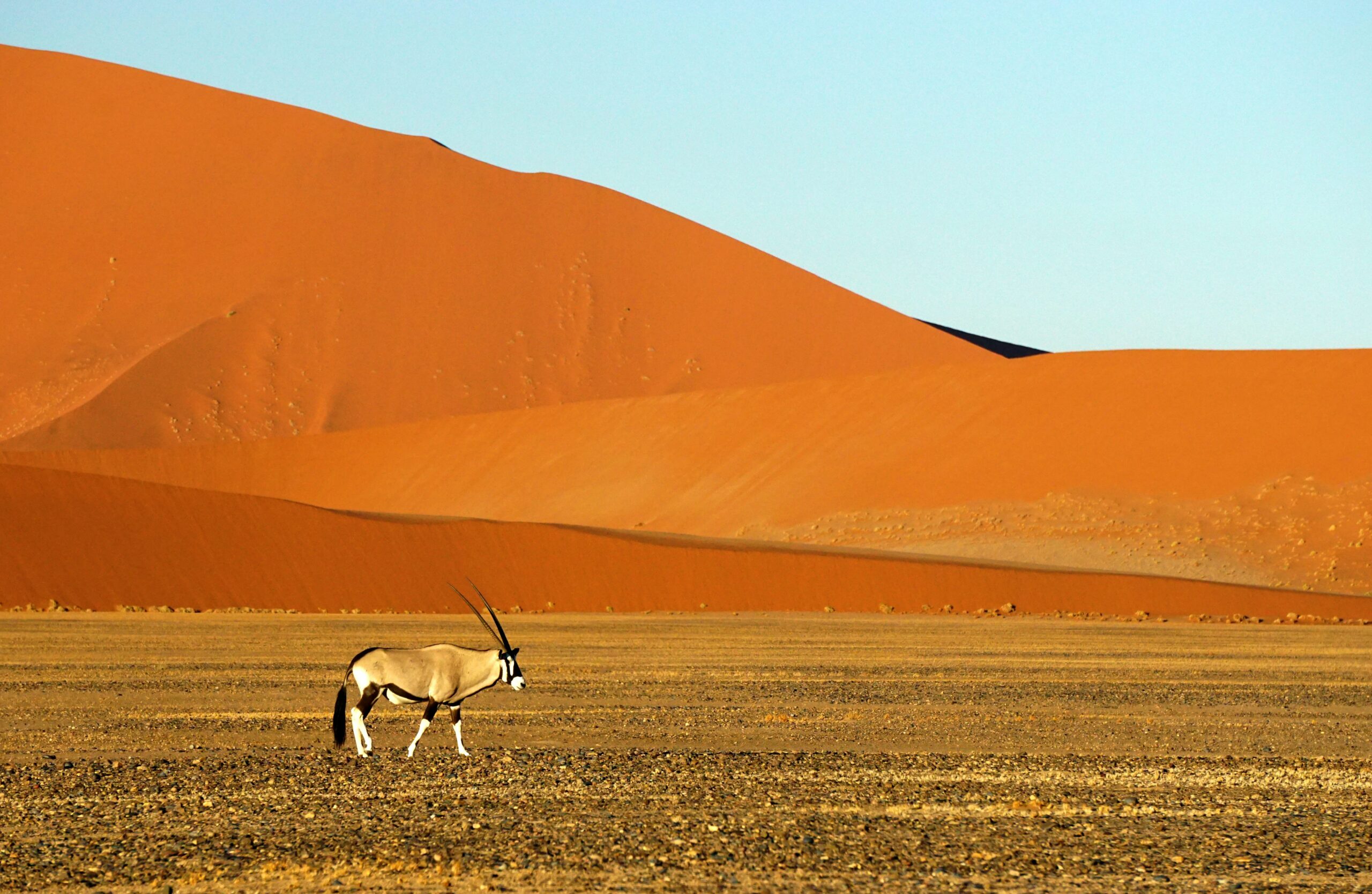
Food & Drink: Namibia is a very meat-orientated society, and eating can be a feast, particularly for carnivores. Don’t be surprised to see many types of venison, particularly ostrich, springbok and gemsbok on the menu. There’s also a good variety of excellent seafood, including kabeljou, rock lobster and oysters. With its Germanic heritage, you can expect delicious pastries and breads as well. Namibia is well known for its local beers, and most hotels stock a wide selection of excellent South African wines.
Dress: Pack practical, informal, neutral clothing for your Namibia safari. Loose fitting clothing in natural fabrics is ideal for the hot days. However it can be cool at the coast and in the evenings, so ensure you have a warm jacket as well. Swimwear and sarong are essential, as is a good sunhat!
Travelling Around Namibia: Flying is the quickest and often the most economical way to travel around the country. There are a number of regular scheduled regional flights, as well as private charters to fit your holiday itinerary.
Namibia is a very easy country to self-drive. Rental cars are available at both Windhoek and Walvis Bay International Airports, as well as some other major centres. An International driving permit is required. Traffic drives on the left side of the road. Roads are generally well maintained. There are 64,799km (40,266 miles) of road, of which 7841km (4872 miles) are tarred.
A tarred road runs from the south through Upington in South Africa to Grünau, where it connects with the tarred road from Cape Town. The trans-Kalahari highway, which was completed in 1998, links Walvis Bay and Windhoek with Gaborone, Botswana and Gauteng, South Africa. The trans-Caprivi highway runs through the Zambezi Region and via Botswana into Zimbabwe.
Namibia's Top Attractions
What To Do in Namibia
- Etosha National Park
- Sossusvlei & Namib Naukluft Reserve
- Damaraland
- Skeleton Coast
- Fish River Canyon
- Swakopmund & Walvis Bay
- Zambezi Region (Caprivi)
- Self Drive Holidays
- Family Safaris
- Flying Safaris
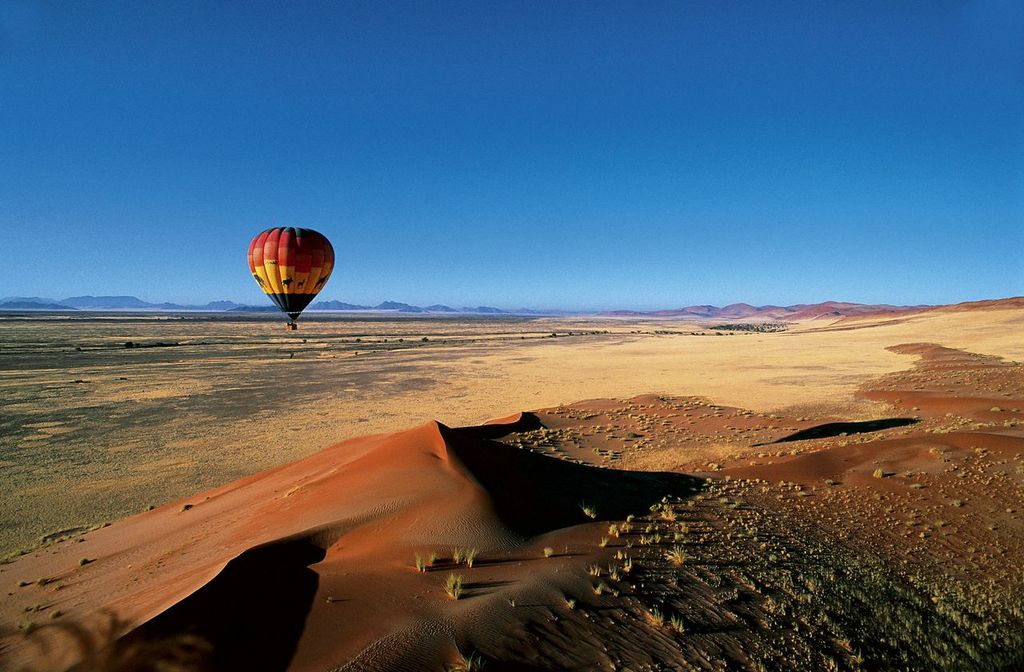
- Quad Biking, Hiking, Kayaking, Hot Air Ballooning
- Photographic Safaris
- Birding Safaris
Where to Go
Etosha National Park
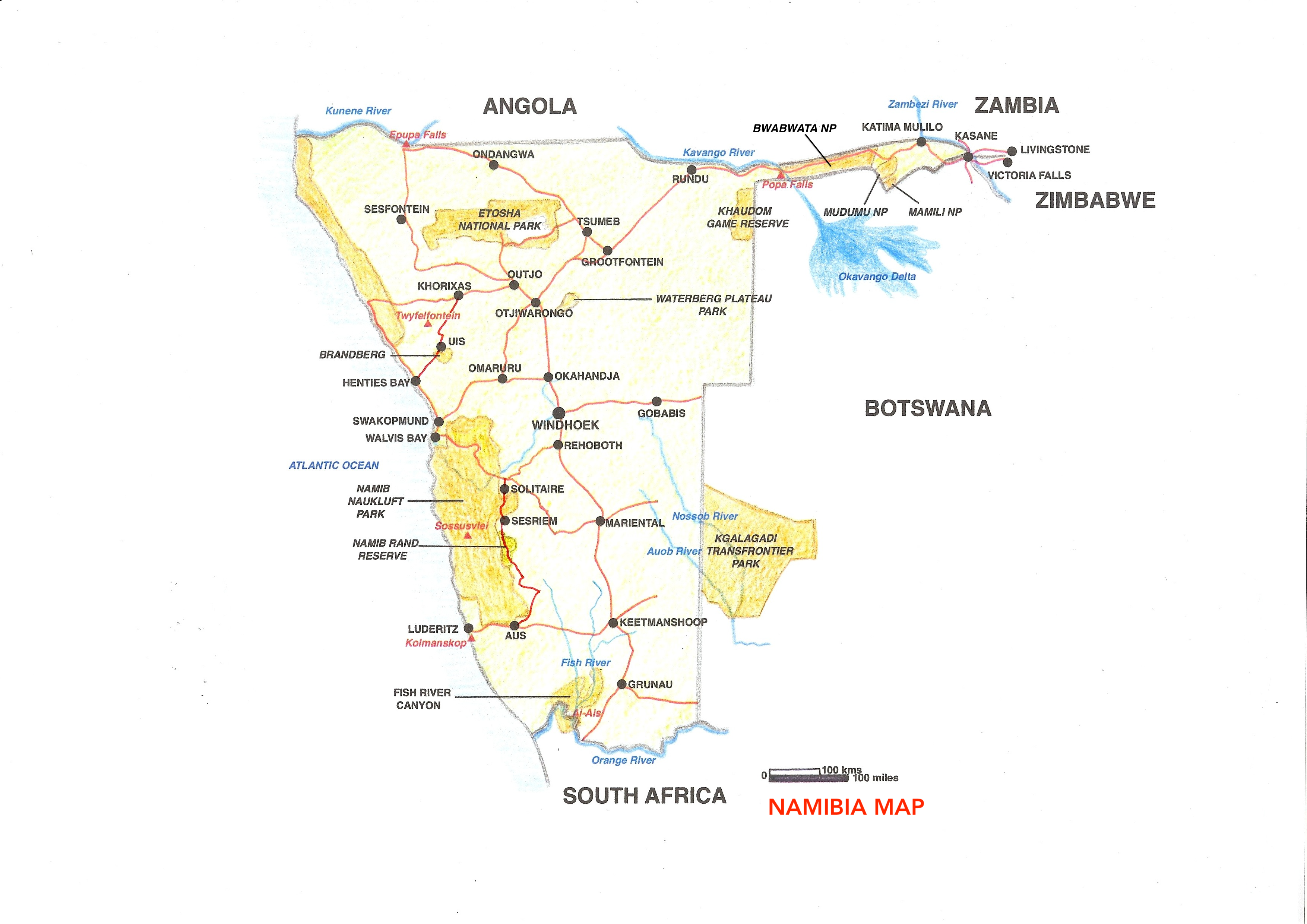
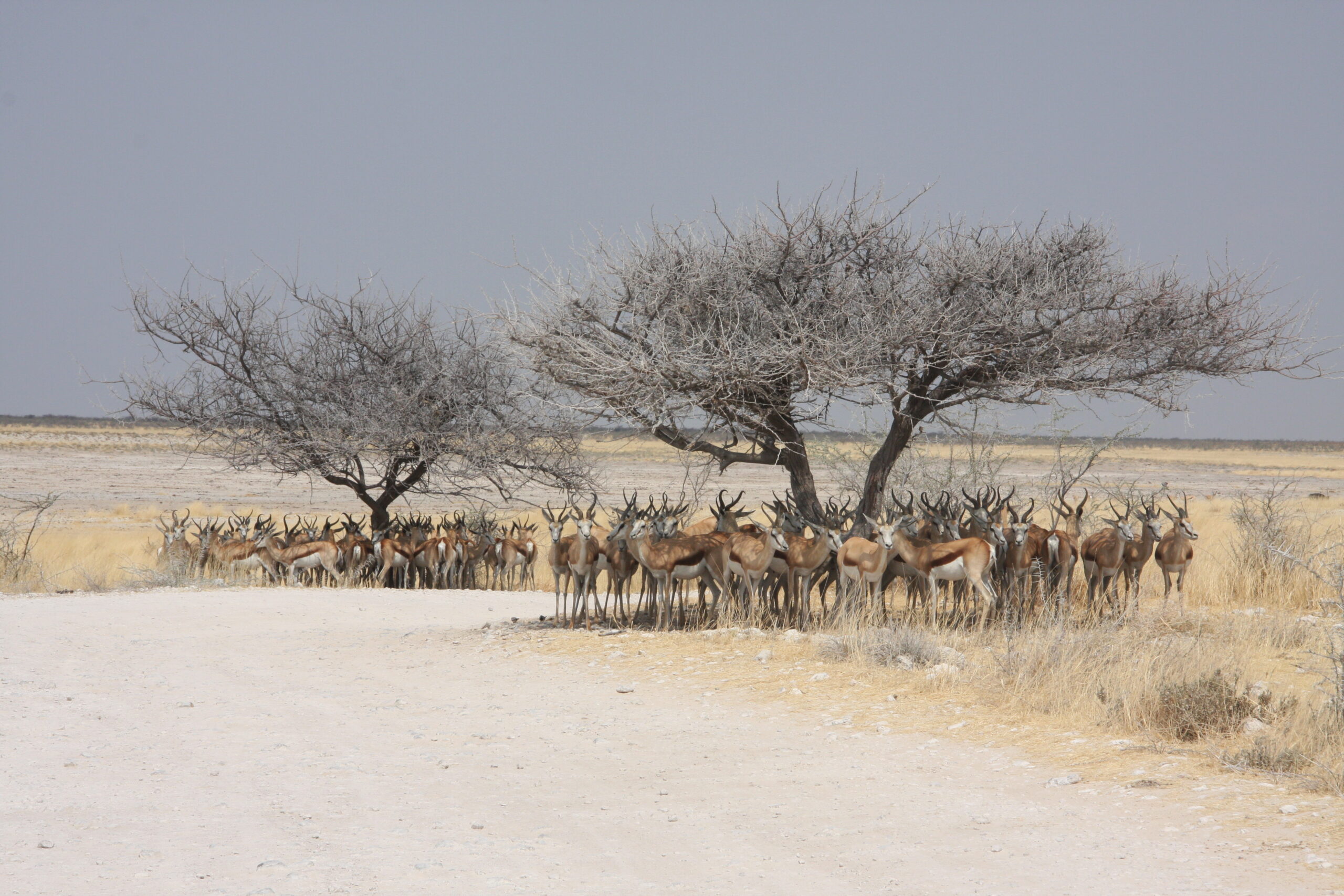
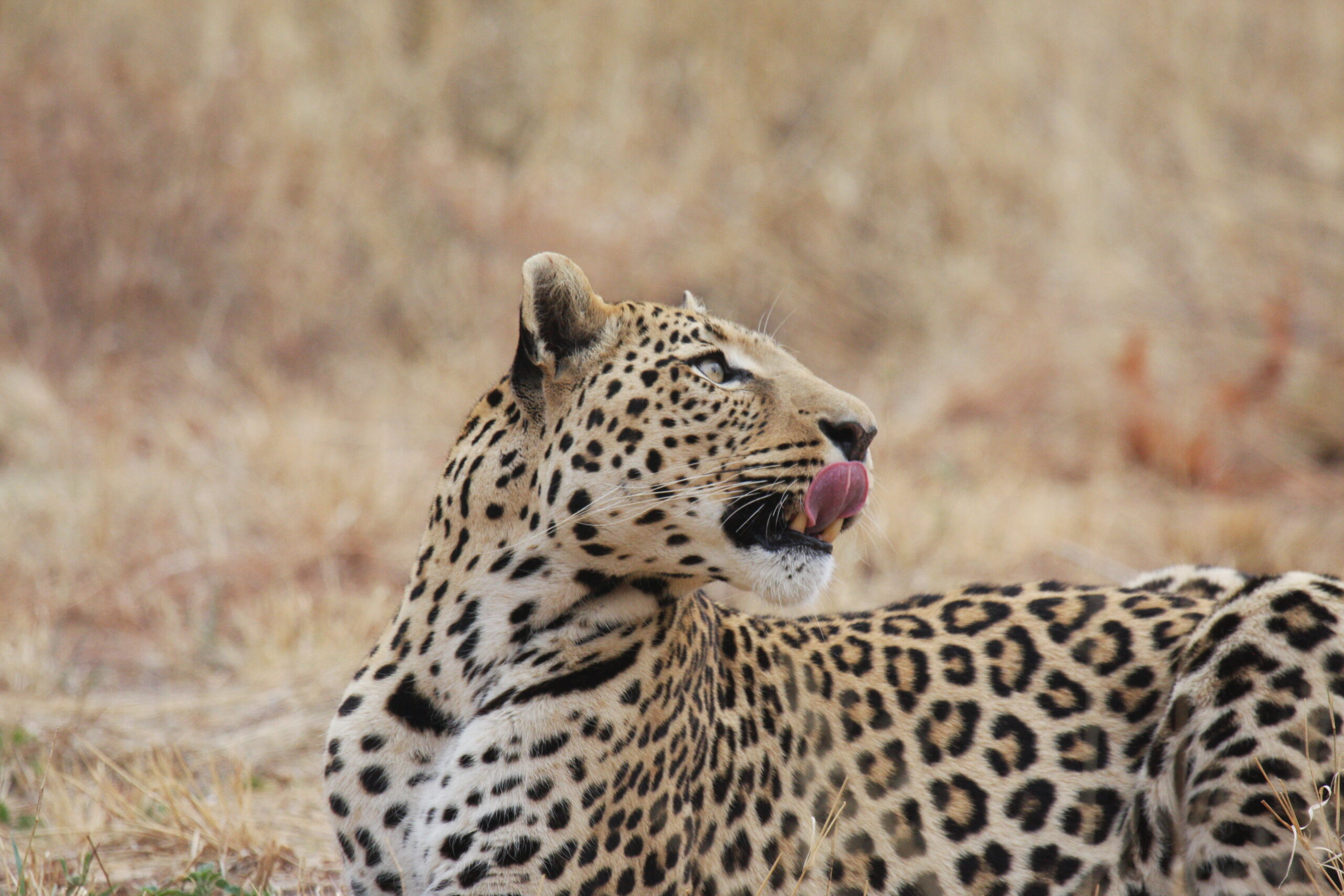
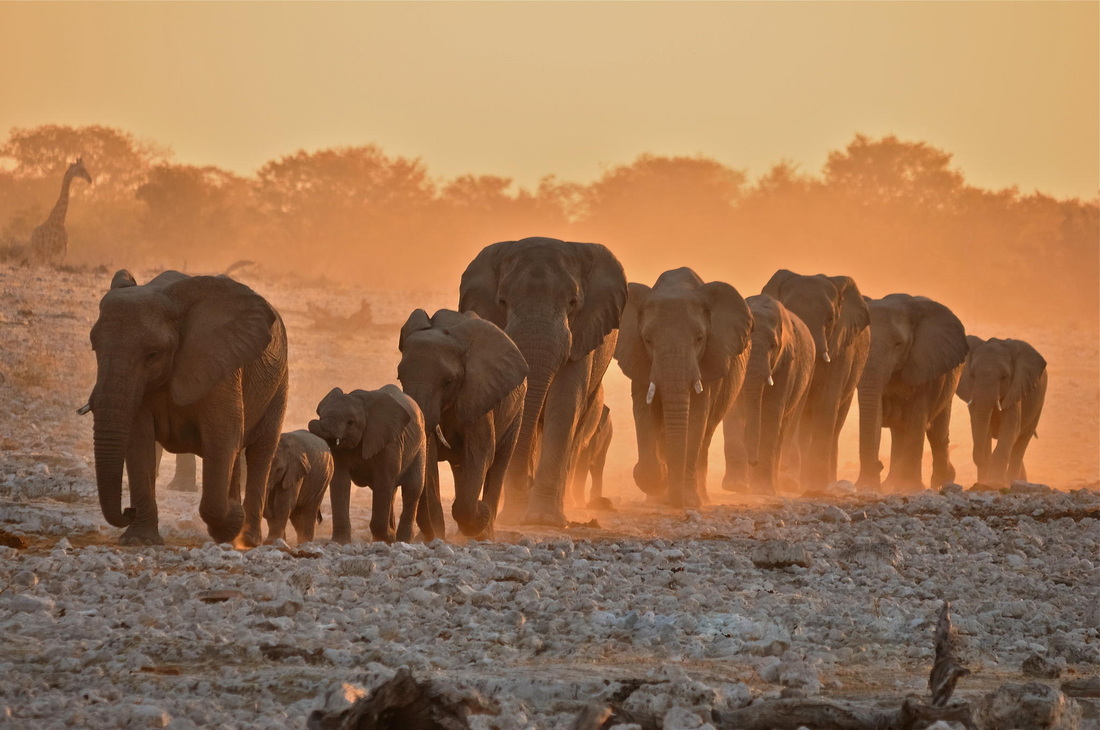
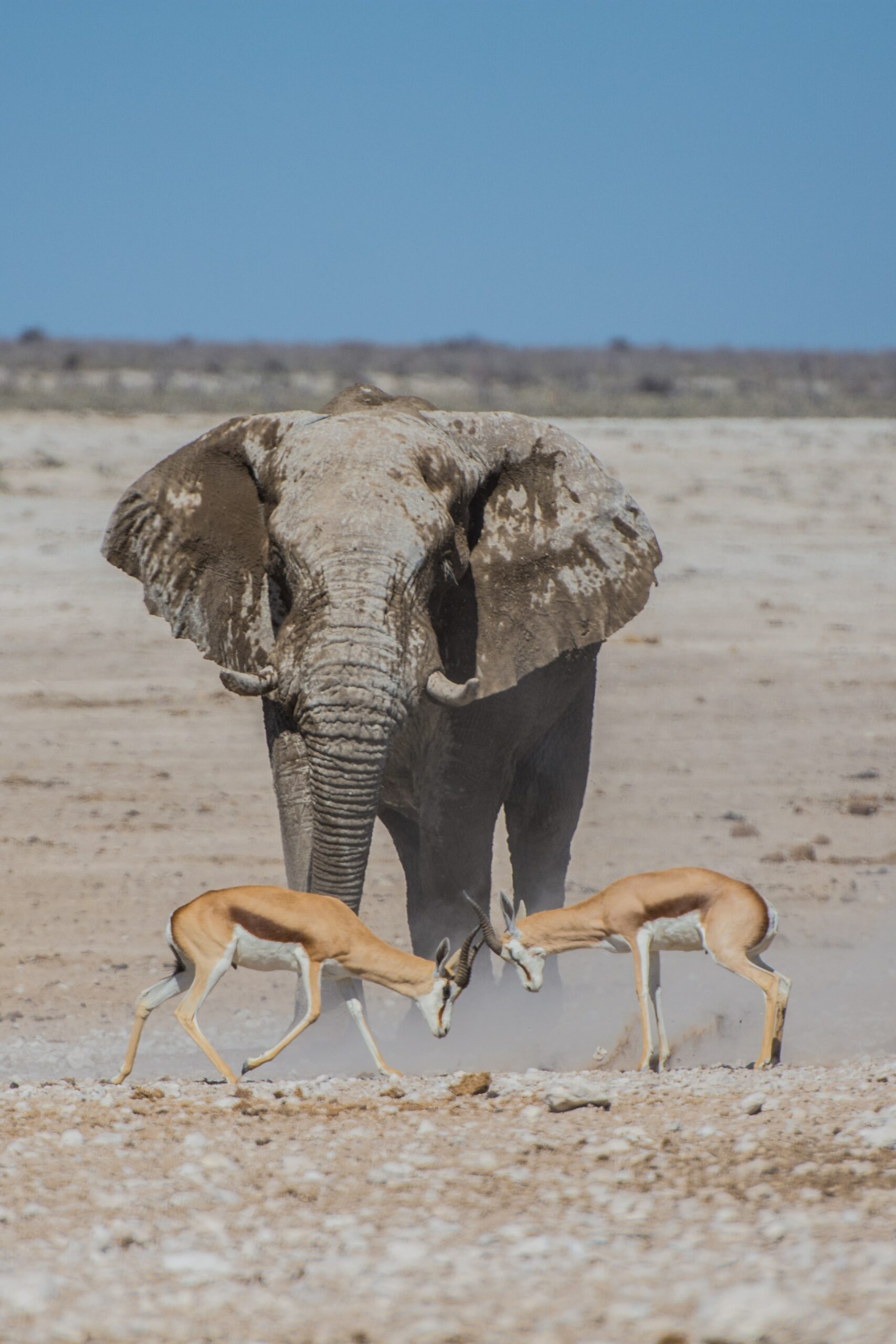
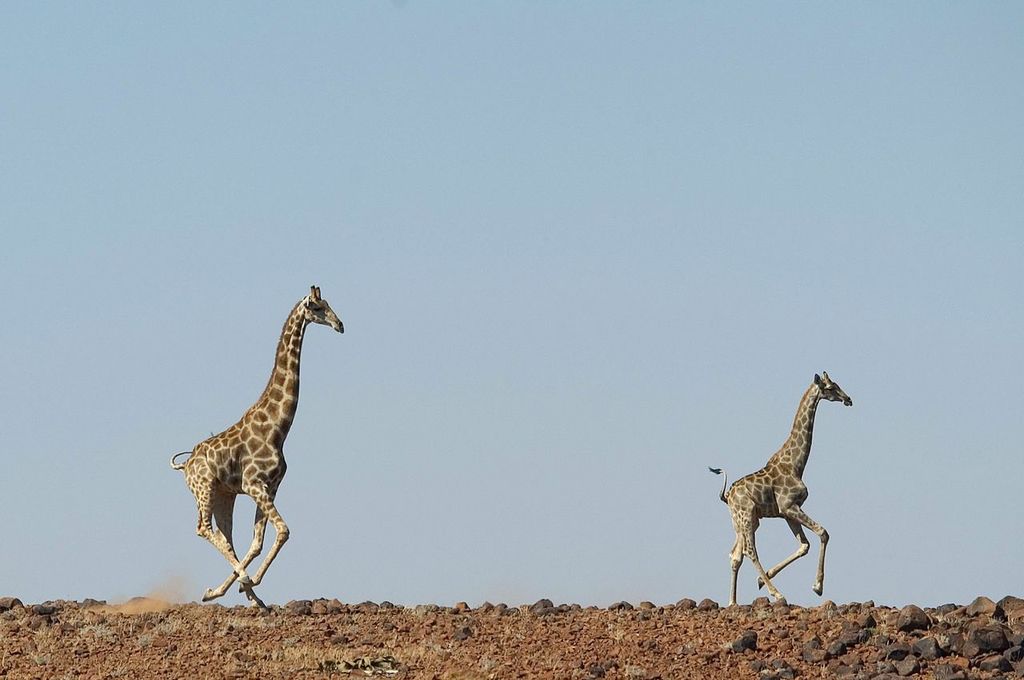
Covering 22 270km², Etosha is one of Southern Africa’s finest national parks. Etosha is dominated by a massive mineral pan which covers nearly 25% of the park – a vast shallow depression of approximately 5000km². Home to 114 mammal species, 340 bird species, and over 125 reptile and amphibian species, Etosha guarantees rewarding and often spectacular game viewing. Expect to see elephant, giraffe, lions and rhino as well as many buck species. More fortunate visitors will see leopard and cheetah. A network of roads link the string of perennial waterholes along the southern edge of the Etosha Pan, which draw large concentrations of wildlife and birds. Watch patiently at these waterholes and you will experience the wonder of life at Etosha as the animals congregate to drink in this parched wonderland.
Game viewing is excellent throughout the year, although the best time to visit Etosha is during Namibia’s cooler winter months, from May to September.
Luxury lodges are located close to the gates to the Park, to the south and east of the pan, many within their own private reserves bordering the National Park. These offer superb accommodations on a fully inclusive basis including game drives into the National Park, and within the fenced boundaries of their own reserves.
Sossusvlei & Namib Naukluft Reserve
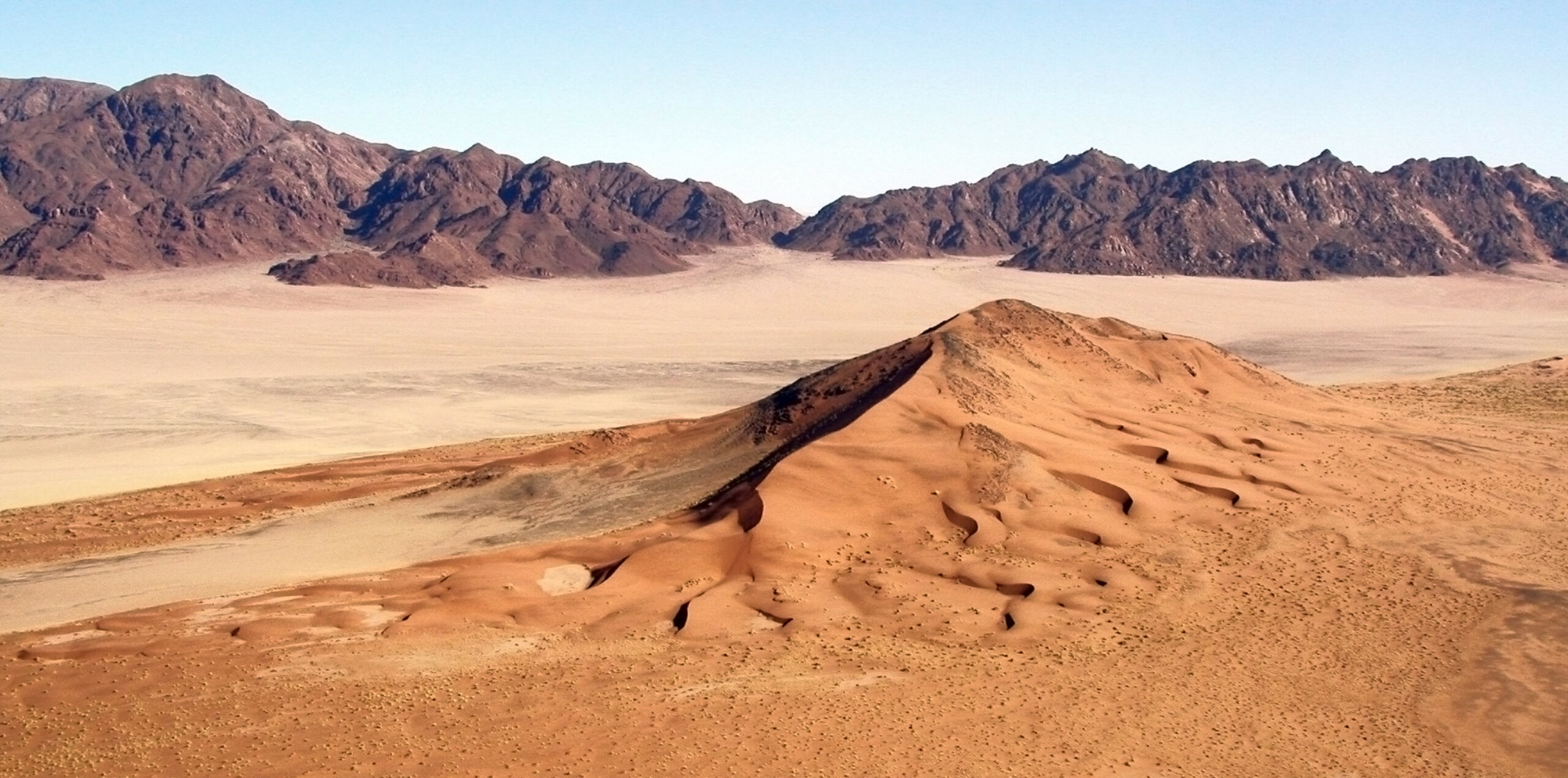
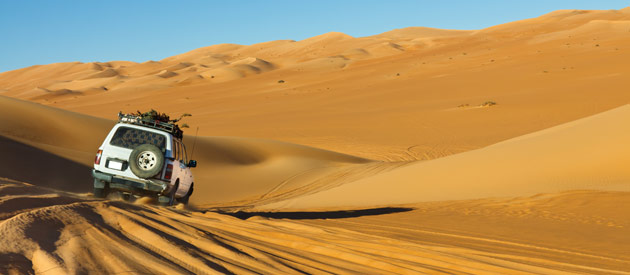
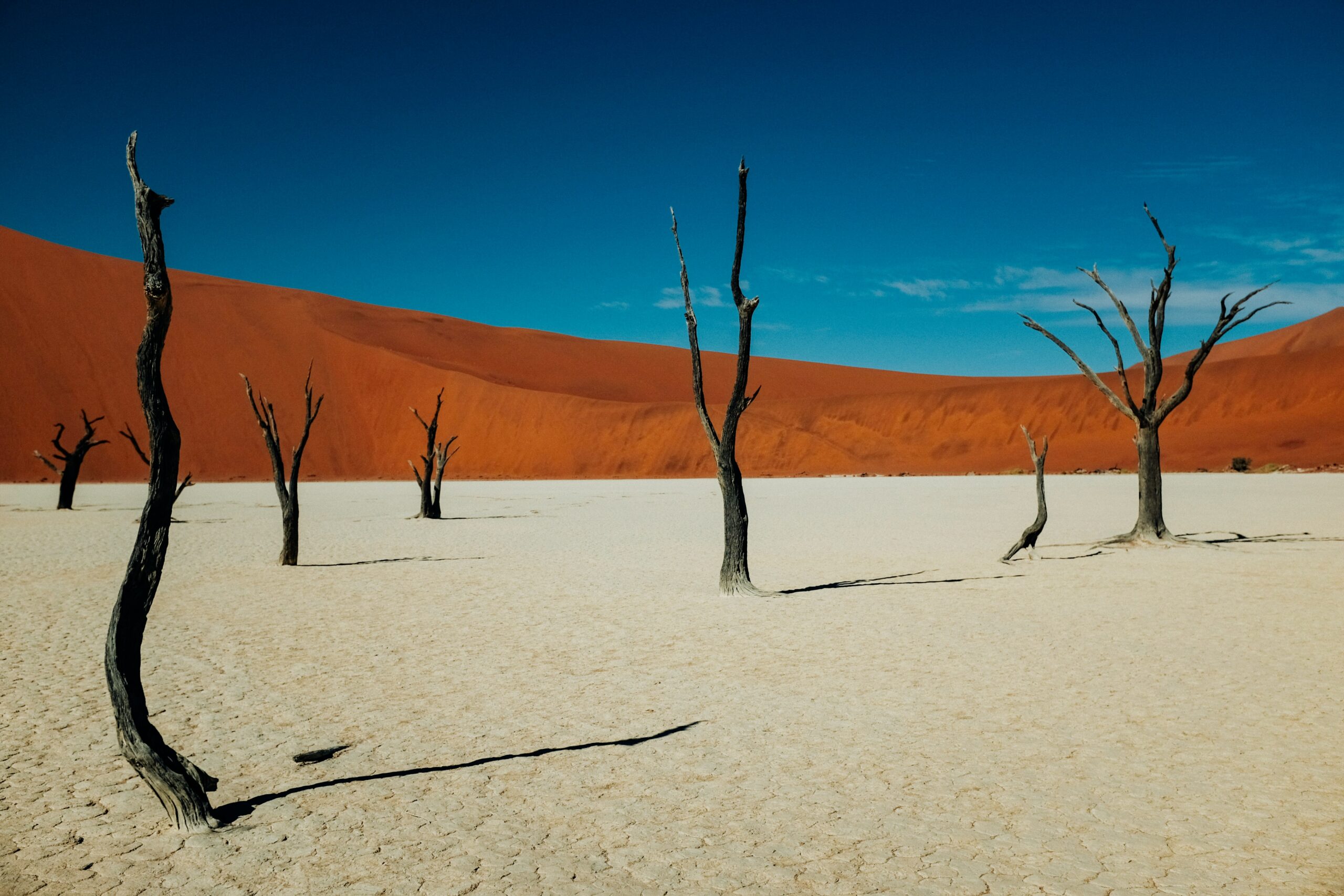
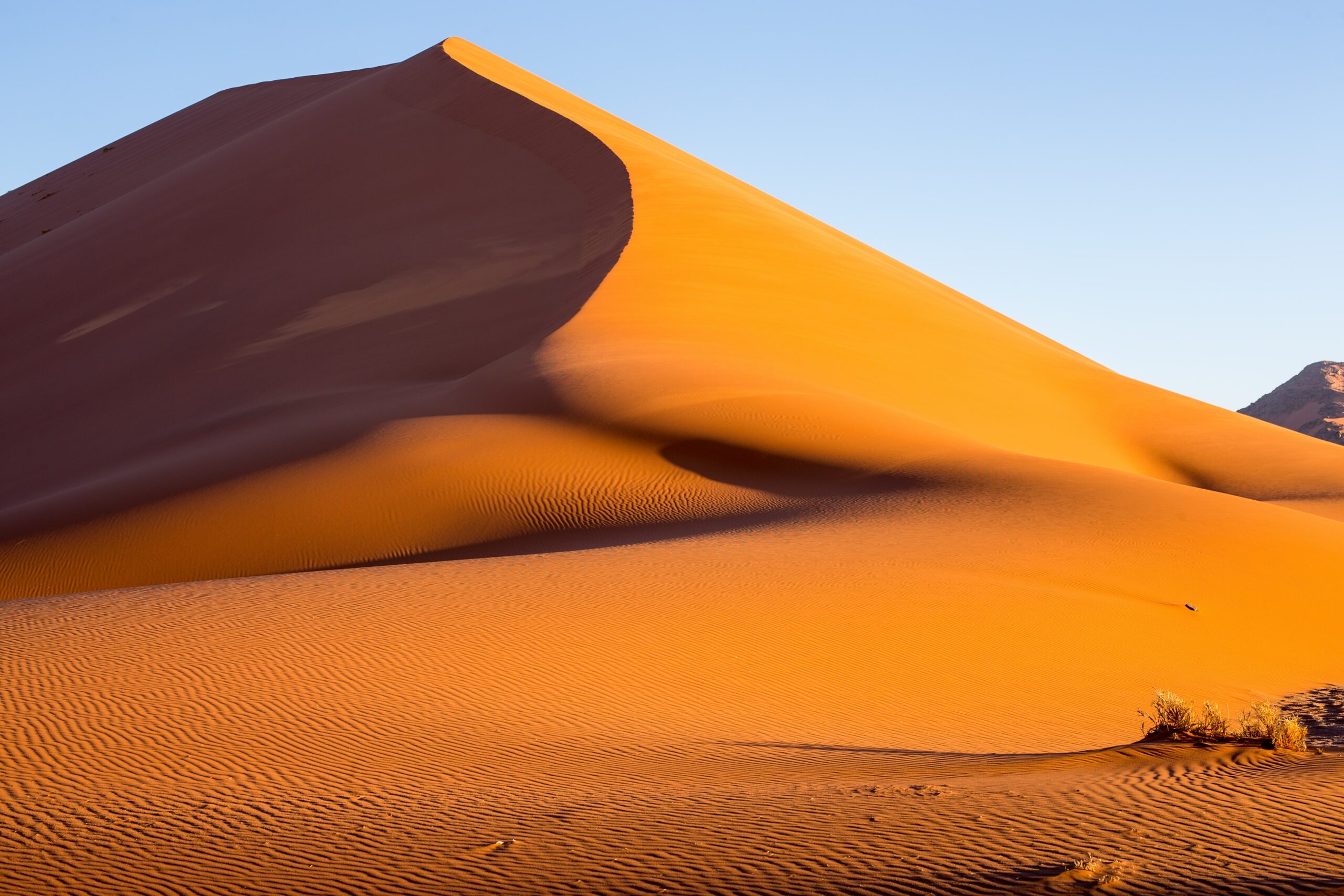
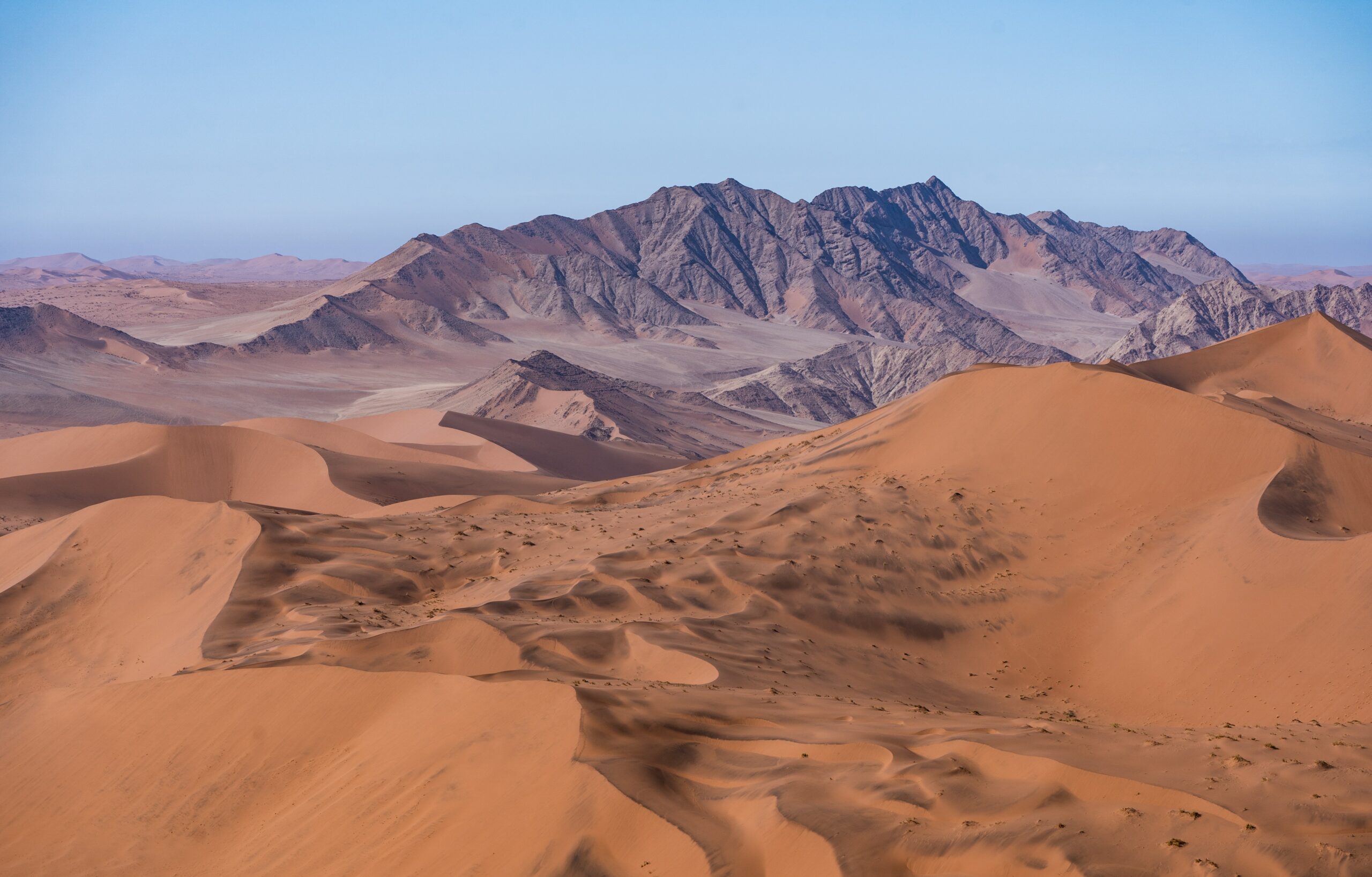
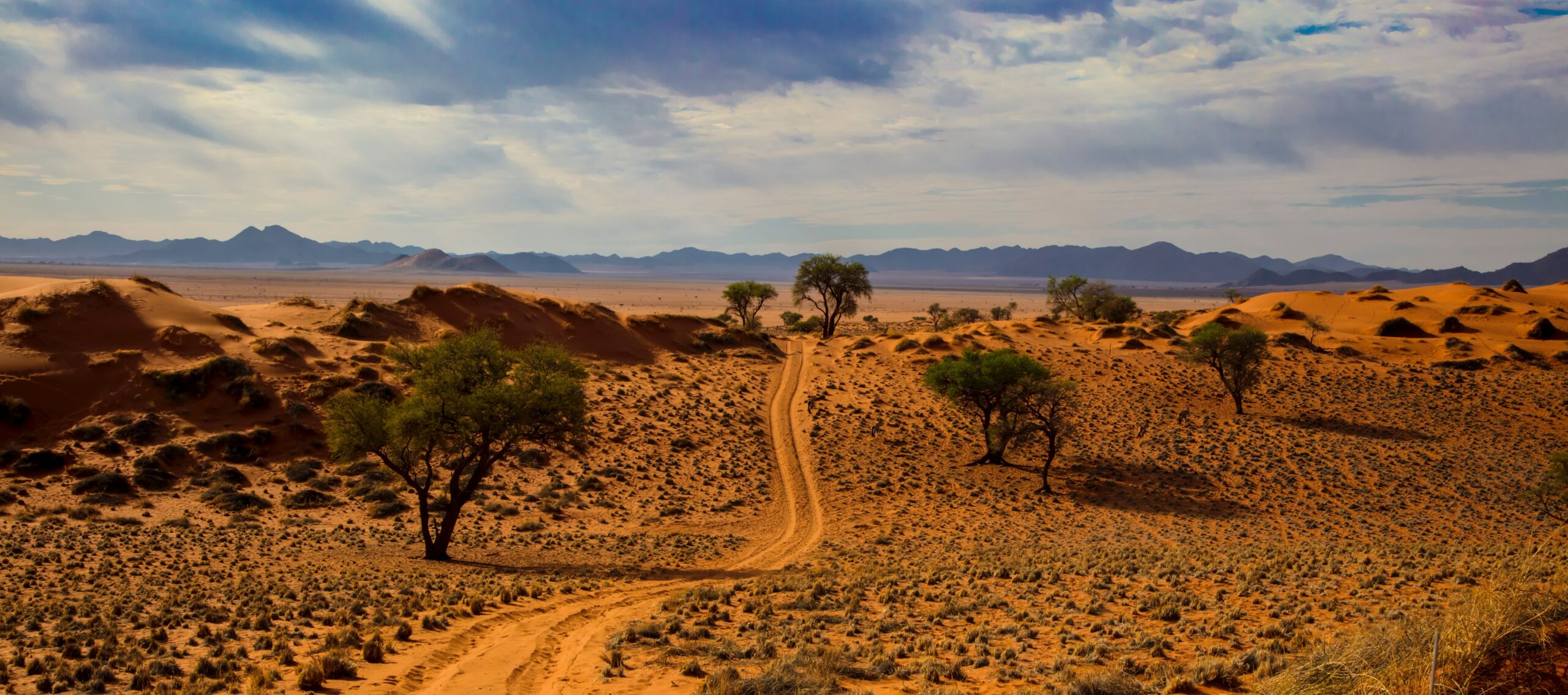
Internationally known as a photographer’s dream the monumental sand dunes of Sossusvlei in the Namib Desert measure over 300 meters and these giant sentinels are certainly amongst the most spectacular sights in Namibia.
Sossusvlei itself is a huge clay pan, enclosed by these massive dunes. The best times to view and photograph the striking patterns of these giant red dunes are at sunrise and sunset, when colours are strong and the sharp edges highlighted against shade. The midday heat is intense and best spent in the shade.
At the entry to Sossusvlei is the second attraction of the area – Sesriem Canyon. Centuries of erosion have incised a narrow gorge of about 1km in length. The canyon begins almost imperceptibly as a deep cleft in otherwise level, stony ground, and then widens and flattens onto the plain. At the foot of the gorge, which plunges down 30m to 40m, are pools of water that become replenished after good rains. Because the gorge is so deep, and sheltered, it often holds water well into the dry season – an invigorating oasis in this otherwise harshly arid environment.
Damaraland
Damaraland is renowned for its fascinating geological features and ancient San rock paintings. Nowhere in Namibia are you more aware of its ancient roots, than in Damaraland.Twyfelfontein offers fantastically preserved rock paintings and engravings, dating back thousands of years. The desolate volcanic landscape of Burnt Mountain, and closeby you find the perpendicular basalt rock formations known as the Organ Pipes. The Brandberg and Spitzkoppe are two favourite places for climbers in Namibia, and both mountains contain a high density of San (Bushman) art, none more famous than the “White Lady” in the Brandburg Nature Reserve. Dinosaur footprints preserved in sandstone near Khorixas and the Petrified Forest, with its 250-million year old fossilised trees and ancient Welwitschia plants bear witness to the timelessness of this country.
Skeleton Coast
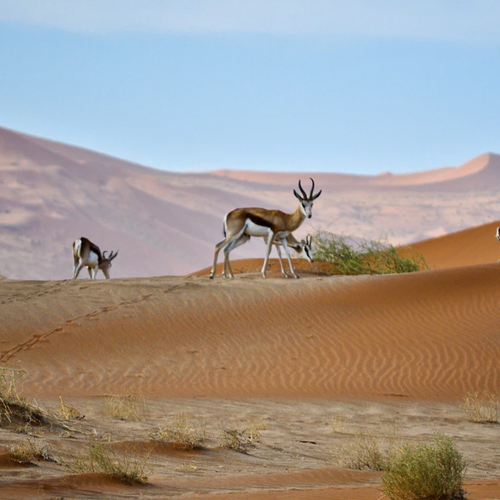
Namibia’s Skeleton Coast is wild, desolate and hauntingly beautiful, with roaring sand dunes, towering canyons, saltpans and windswept plains. Freshwater springs permeate through barren sands to create rare oases in the desert that sustain pockets of wildlife. Springbok, gemsbok (oryx), the rare desert elephant, ostrich, Cape fur seals, jackal and brown hyaena – and even cheetah on rare occasions – eke out an existence in this rugged terrain, along with the vegetation like the ancient welwitschia plant which has adapted to the harsh conditions.
Synonymous with shipwrecks, and the bleached skeletons of whales, and desert animals littering the sands, this magnificently dramatic region is best visited on a fly-in safari
The Fish River Canyon
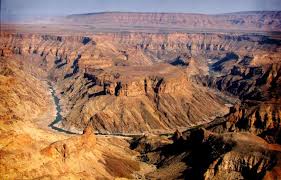
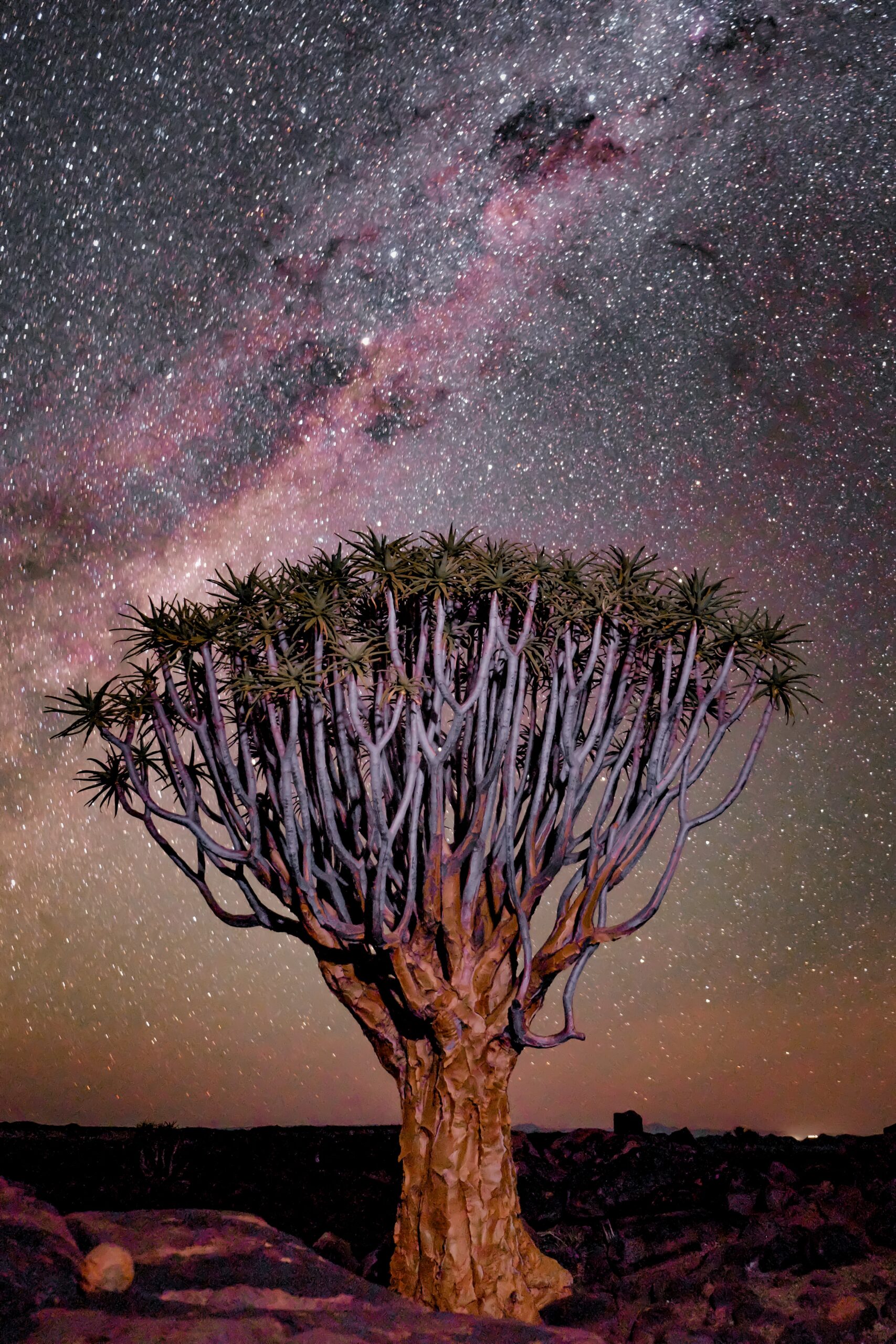
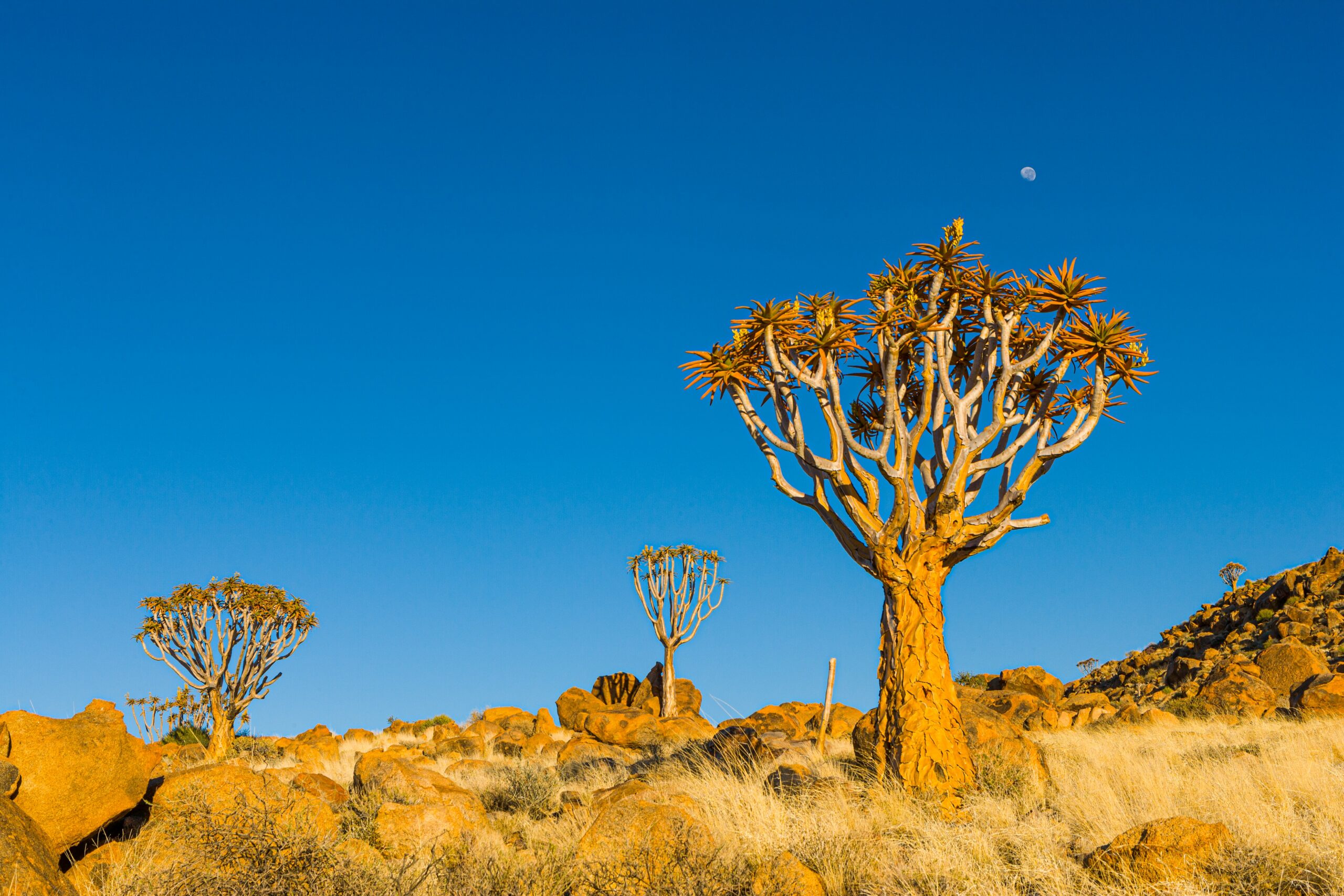
The Fish River Canyon is the world’s second largest canyon (after the Grand Canyon). Set in a harsh and desolate landscape, where the climate is almost constantly hot and dry, the Canyon is 160km long, 27km wide and up to 550m deep. The warm springs of Ai Ais afford you the possibility to swim and relax in this starkly beautiful environment. Drought-resistant succulents such as the eerily beautiful Kokerboom and Quiver Tree, are found here.
Swakopmund & Walvis Bay
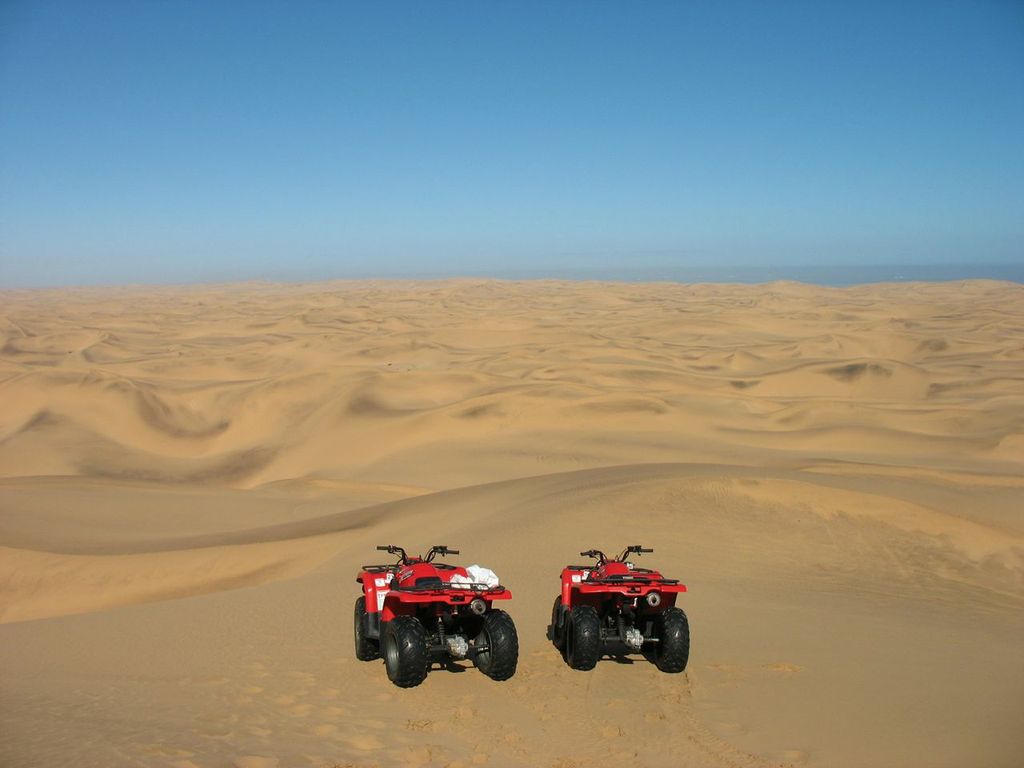
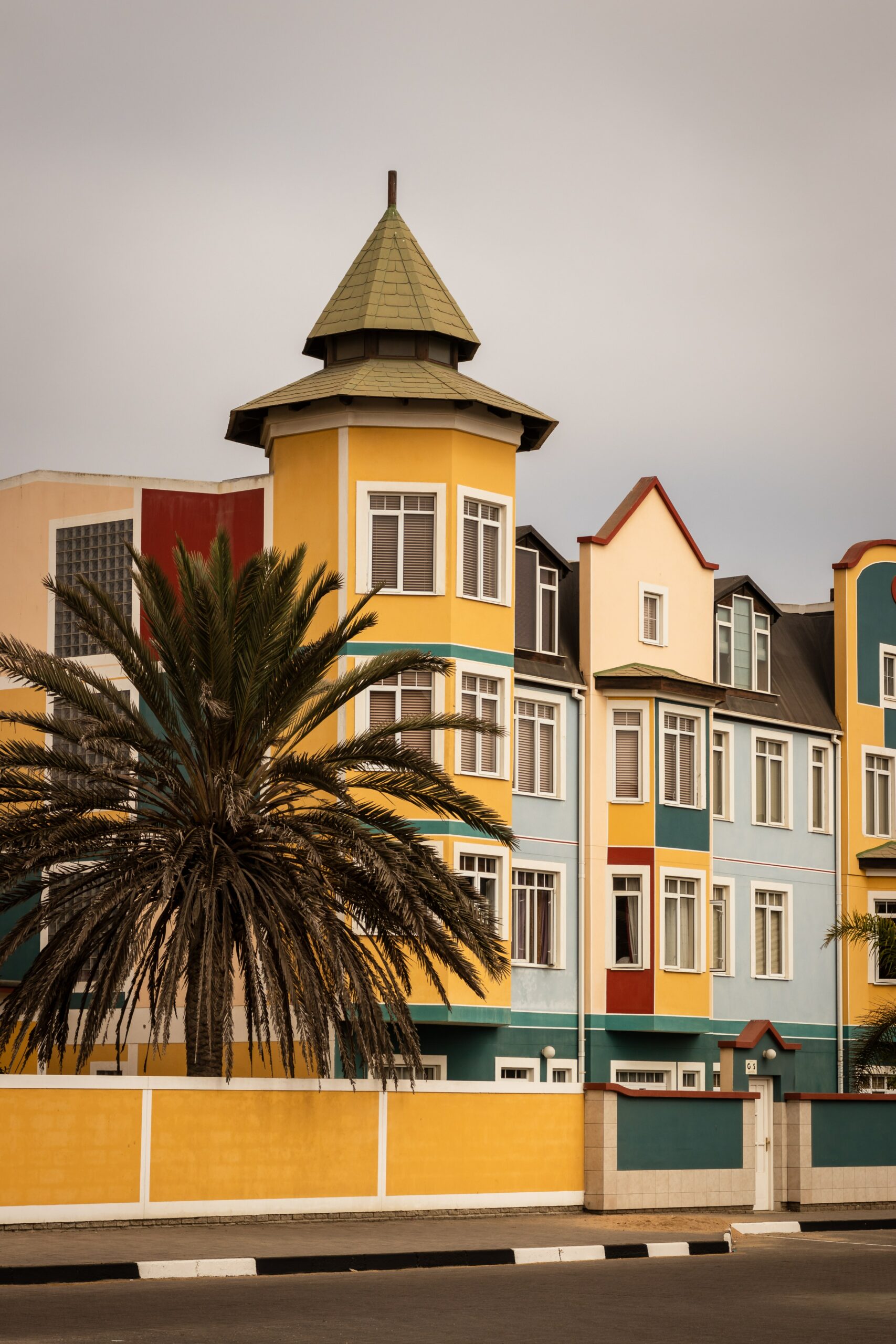
The Germanic coastal town of Swakopmund sits between the shifting sands of the Namib Desert and the cool waters of the Atlantic Ocean. Frequently misty in the mornings, this pretty town is a very pleasant contrast to the heat of the inland regions. Colourful buildings house souvenir and antique shops, as well as some very good restaurants, where seafood is not surprisingly a speciality. A refreshing stopover on a self-drive tour, Swakopmund offers a variety of fun activities, including quad biking in the dunes, kayaking to visit the seal colonies at Pelican Point, fishing, and 4×4 guided desert tours.
Located just to the south of Swakopmund is Walvis Bay, Namibia’s main port, and one of southern Africa’s most important wetland areas. Walvis Bay’s tidal lagoon and salt pans are a sanctuary for migrating birds. Large numbers of flamingoes, pelicans and Damaraland terns can be seen here. In addition to excellent birding opportunities, Cape fur seals, dolphins and whales can be found in the Atlantic waters around the Pelican Point lighthouse.
Zambezi Region
Previously called the Caprivi Strip, this fertile region in the north of Namibia receives high rainfall and supports lush vegetation and diverse wildlife. Both the Okavango and Kwando Rivers flow through the region. Several national parks can be found here, including Mahangu, Bwabwata and Mudumu, combining to offer excellent and diverse game viewing and birding through intricate networks of waterways, riverine forests and floodplains.
Climate & When to Visit Namibia
|
|
Jan |
Feb |
Mar |
Apr |
May |
June |
July |
Aug |
Sept |
Oct |
Nov |
Dec |
|
Etosha & Damaraland |
✓ |
✓ |
✓ |
✓✓ |
✓✓ |
✓✓✓ |
✓✓✓ |
✓✓✓ |
✓✓✓ |
✓✓✓ |
✓✓✓ |
✓ |
|
Skeleton Coast & Cunene |
✓✓ |
✓✓ |
✓✓ |
✓✓ |
✓✓✓ |
✓✓✓ |
✓✓✓ |
✓✓✓ |
✓✓✓ |
✓✓ |
✓✓ |
✓✓ |
|
Namib Desert |
✓✓ |
✓✓ |
✓✓ |
✓✓ |
✓✓✓ |
✓✓✓ |
✓✓✓ |
✓✓✓ |
✓✓✓ |
✓✓ |
✓✓ |
✓✓ |
|
Zambezi Region |
✓ |
✓ |
✓ |
✓✓ |
✓✓ |
✓✓✓ |
✓✓✓ |
✓✓✓ |
✓✓✓ |
✓✓✓ |
✓✓ |
✓✓ |
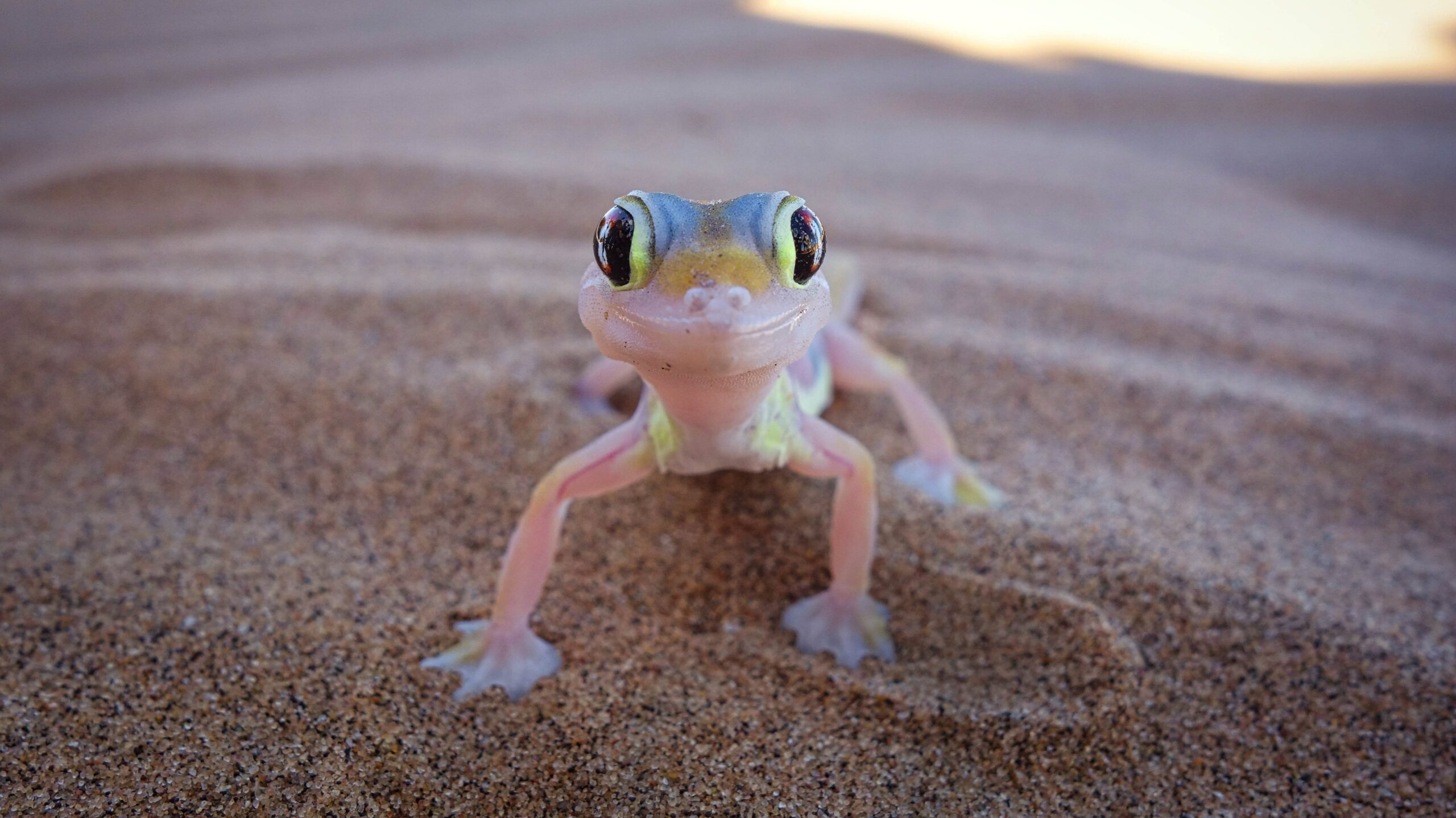
Namibia is named after the Namib Desert, one of the world’s most inhospitable and driest deserts, which comprises 15% of the country. The climate inland is generally dry, pleasant and warm, and the coastal region is generally cool and dry, making Namibia a good year-round destination.
Summer in Namibia is from November to April, when days are generally hot and sunny. Daytime temperatures can rise to 35ºC and night temperatures drop to around 14ºC – 18ºC. Summer is also Namibia’s rainy season, although Namibia receives only a fraction of the rain experienced by its neighbours further east, and average rainfall varies from less than 50mm along the coast to 350mm in the central region and 700mm in the far north-eastern region. Between December and March you can expect some humidity and rain, often as localised afternoon thunderstorms. April and May are usually very pleasant months in Namibia, with a freshness and clarity in the air, striking green landscapes and warm weather.
From June until September, days are cooler, and the drier landscapes make game viewing easier. The green disappears as Namibia becomes a shimmering tableau of ochres, oranges, reds, greys and browns. These are Namibia’s winter months. Daytime temperatures generally reach 22ºC and can drop to as low as 0ºC – 8ºC at night. It can be quite cold and windy at the coast and it is advisable to bring warm clothing.
Towards the end of September and into October, the temperatures rise again. Weather can vary – some days will be hot and dry. Others may be hot and humid, and the first rains of the season are always dramatic and very welcome!